
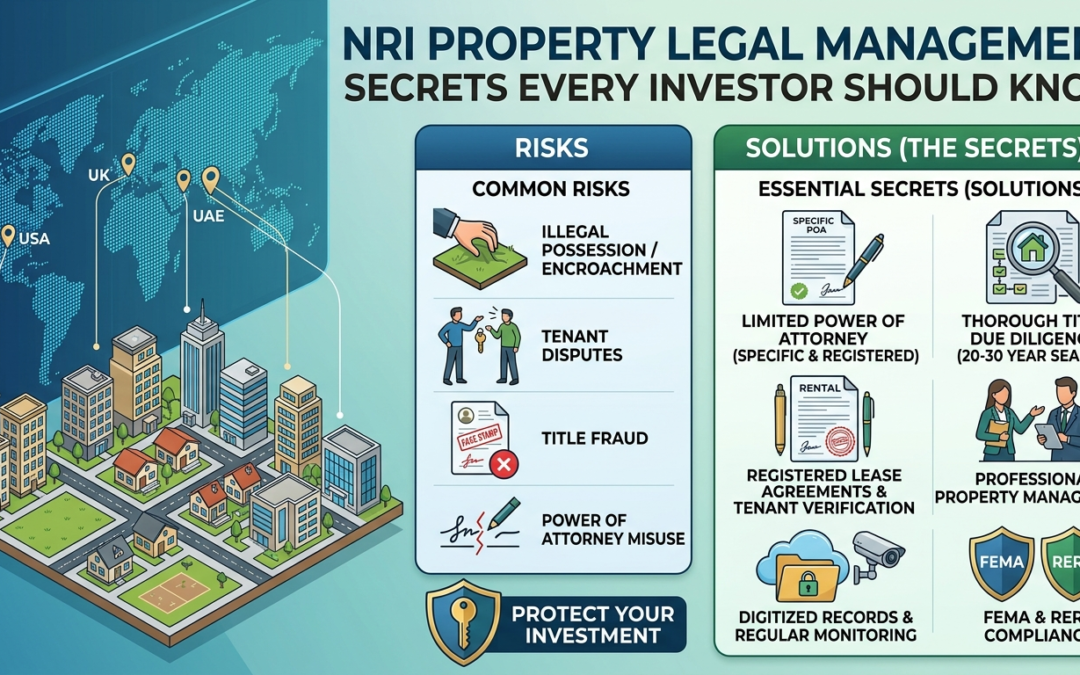
NRI Property Legal Management: Secrets Every Investor Should Know
Introduction
Investing in property in India can be rewarding for NRIs, but NRI property legal management is crucial to avoid complications. Many NRIs face challenges like delayed registrations, title disputes, or compliance issues due to unfamiliarity with Indian property laws. This guide uncovers the secrets every NRI investor should know to ensure hassle-free ownership and protect their investment.
Understanding Legal Requirements for NRIs
Before purchasing property, NRIs must know the legal framework. Under the Foreign Exchange Management Act (FEMA), NRIs can buy residential or commercial property but generally cannot purchase agricultural land, plantation property, or farmhouses. Verifying the property’s legal status, approvals from local authorities, and checking for ongoing disputes are essential steps in NRI property legal management. Consulting a lawyer specializing in NRI property laws ensures compliance and prevents legal pitfalls.
Importance of Document Verification
Proper document verification is the backbone of NRI property legal management. Key documents include the sale deed, property title, encumbrance certificate, and municipal approvals. NRIs should confirm clear ownership, no pending mortgages, and up-to-date property tax payments. Thorough verification safeguards against disputes, ensuring your property can be sold, leased, or inherited without legal obstacles.
Power of Attorney (PoA) for NRIs
Many NRIs cannot physically manage property in India, making a Power of Attorney (PoA) essential. A PoA allows a trusted representative to act on your behalf for property registration, lease agreements, or maintenance. It is crucial to draft a PoA with precise legal terms and register it properly. Clearly defining the powers helps prevent fraud and ensures your property is managed according to your instructions.
Tax Compliance for NRI Property
NRIs must adhere to Indian tax laws for all property-related income. This includes property taxes, income tax on rental earnings, and capital gains tax on the sale of property. Proper NRI property legal management involves understanding tax deductions available, filing returns timely, and planning tax efficiently. Engaging a tax consultant familiar with NRI rules helps optimize returns and stay compliant.
Planning for Inheritance and Succession
Inheritance is a critical aspect of NRI property legal management. Indian succession laws dictate how property is transferred to heirs. NRIs should prepare wills or nominate beneficiaries to avoid disputes. Proper planning ensures smooth transfer of property and minimizes the risk of litigation among heirs.
Professional Legal Assistance
Engaging professionals is a key secret to stress-free NRI property legal management. Lawyers and property consultants assist with due diligence, document verification, compliance, and resolving disputes. Expert support reduces errors, ensures adherence to laws, and protects investments over the long term.
Ongoing Property Oversight
Even after acquiring property, NRIs should maintain continuous oversight. Monitoring rent agreements, utility payments, maintenance, and legal compliance is crucial. Reliable property managers or agents can provide remote management services, making NRI property legal management easier for those living abroad.
Conclusion
Effective NRI property legal management is about more than buying property—it ensures security, compliance, and long-term peace of mind. By understanding legal requirements, verifying documents, using a PoA wisely, complying with taxes, planning for inheritance, and engaging professional assistance, NRIs can enjoy smooth property ownership. Following these secrets protects your investment, making your property venture profitable and legally sound.