
NRI Property Sale TDS: How Much Tax is Deducted & Why?
When selling property in India, understanding NRI Property Sale TDS is essential for avoiding unexpected tax deductions and ensuring smooth transactions. Many Non-Resident Indians (NRIs) are surprised by the high Tax Deducted at Source (TDS) compared to resident property sales. This blog explains how much tax is deducted and why it applies.
What is NRI Property Sale TDS?
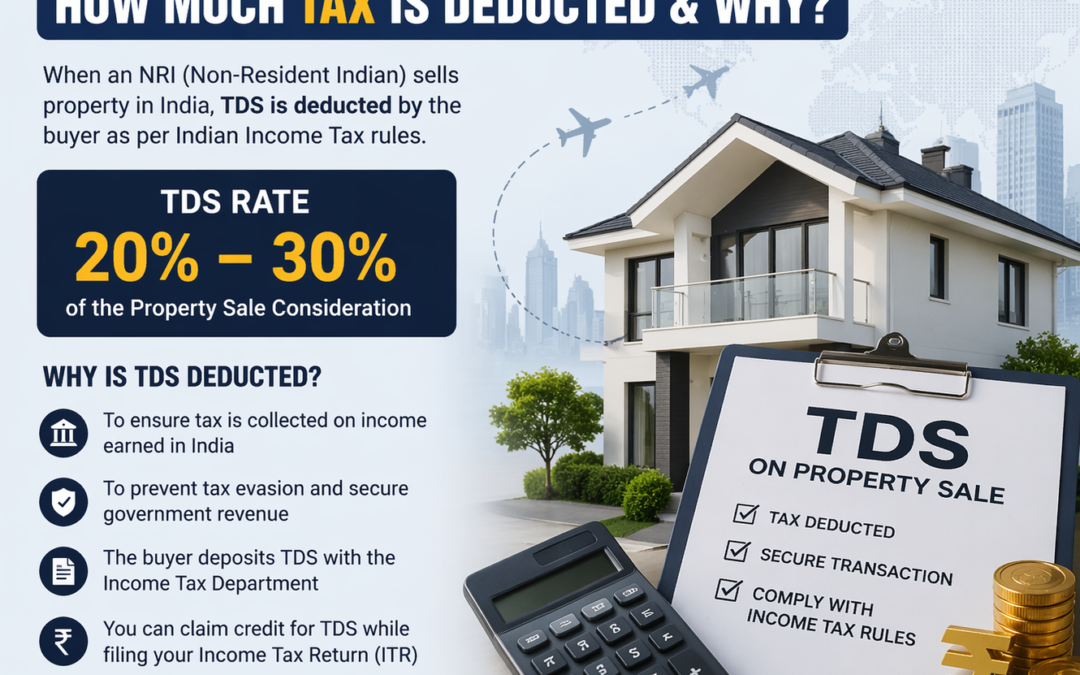
It refers to the tax that the buyer must deduct when purchasing property from an NRI under Section 195 of the Income Tax Act. Unlike resident transactions where TDS is only 1%, NRI transactions involve significantly higher rates.
How Much TDS is Deducted?
The TDS rate depends on the holding period of the property:
- Long-Term Capital Gains (Property held for more than 2 years):
TDS is 20%, plus surcharge and cess. The effective rate usually ranges between 23% to 25%. - Short-Term Capital Gains (Property held for 2 years or less):
TDS is 30%, plus surcharge and cess, making the effective rate around 31% to 34%.
It’s important to note that TDS is generally deducted on the total sale value, not just the capital gains. This often results in a higher amount being deducted upfront.
Why is TDS So High for NRIs?
The government applies higher NRI Property Sale TDS rates to ensure proper tax compliance, as NRIs may not always be easily trackable for tax collection after the transaction. Deducting tax at the source helps the Income Tax Department secure revenue in advance.
Can You Reduce TDS?
Yes, NRIs can legally reduce their TDS burden by applying for a Lower TDS Certificate from the Income Tax Department. This allows tax to be deducted only on the actual capital gains instead of the full sale value.
Additionally, NRIs can save tax by claiming exemptions under:
- Section 54 (investment in another residential property)
- Section 54EC (investment in specified bonds)
Final Thoughts
Understanding NRI Property Sale TDS helps you plan your finances better and avoid unnecessary tax deductions. While the rates may seem high, proper planning—such as applying for a lower TDS certificate and using tax exemptions—can significantly reduce your tax liability. Always consult a tax expert to ensure compliance and maximize your savings.